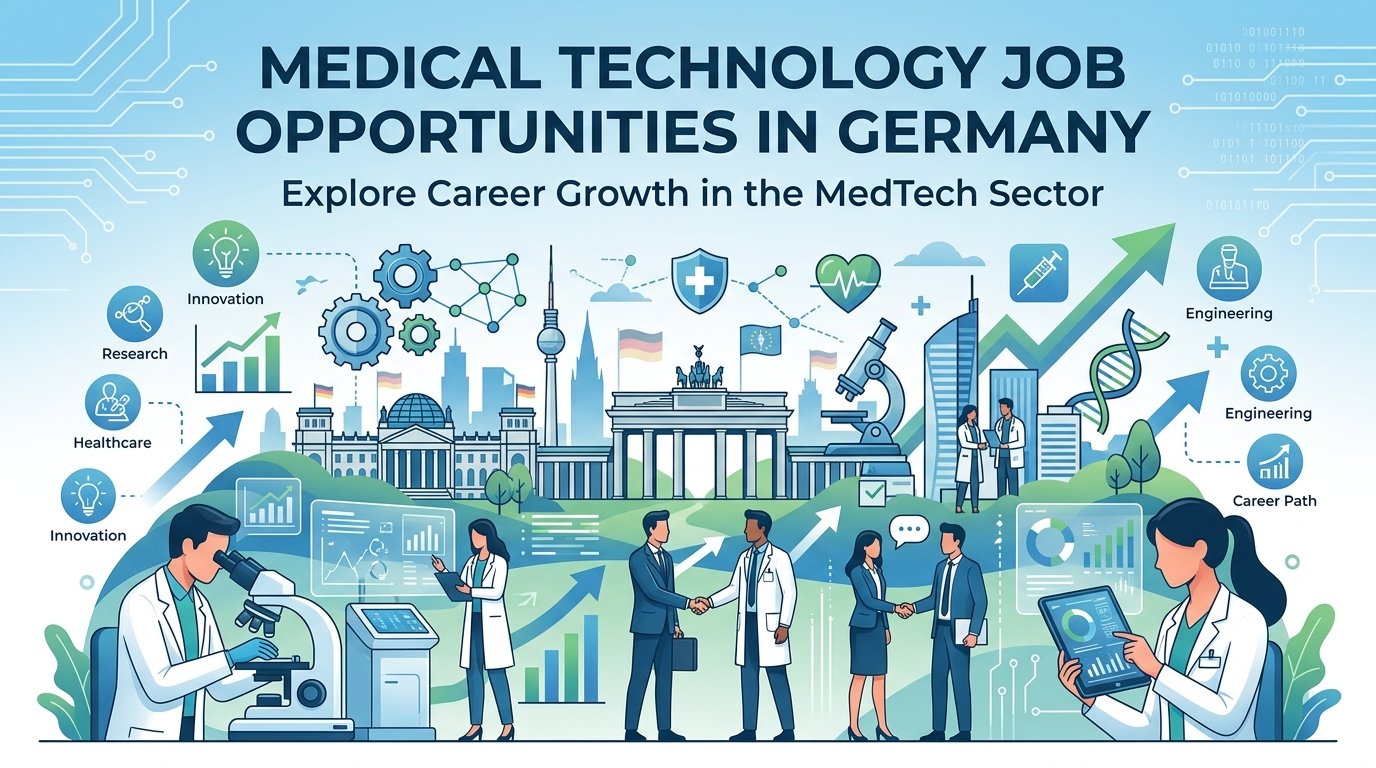
Germany is the largest market for medical technology (Medizintechnik) in Europe and the third-largest globally. Driven by an aging population, digital health transformations (such as artificial intelligence in diagnostics), and significant state investments in hospital infrastructure, the German medical device sector experiences a continuous shortage of specialized professionals.
Under Germany’s updated Skilled Immigration Act (Fachkräfteeinwanderungsgesetz), international biomedical engineers, regulatory affairs managers, and clinical specialists can take advantage of fast-tracked work permits and streamlined residence pathways.
This guide breaks down average compensation, visa options, top medtech employers, and step-by-step application instructions.
Why Pursue a Medical Technology Career in Germany?
A medical technology role in Germany offers strong career stability, competitive earnings, and legal pathways to permanent residency:
- High-Earning Potential: Mid-level biomedical engineers and R&D specialists earn €62,000 to €88,000 annually, while Senior Regulatory Affairs Managers, Quality Assurance Leads, and Technical Sales Specialists earn €90,000 to €135,000+.
- Reduced EU Blue Card Threshold: Medical technology, biomedical engineering, and related STEM disciplines are legally designated as shortage occupations (Mangelberufe) in Germany. The 2026 gross annual salary threshold required to obtain an EU Blue Card for these shortage roles is €45,934.20.
- Fast-Track Permanent Residency: EU Blue Card holders qualify for permanent residence (Niederlassungserlaubnis) in as few as 21 months with B1 German proficiency, or 27 months with basic German skills (A1).
- Global Innovation Hub: Germany hosts world-class R&D clusters in clusters like Bavaria (Medical Valley), Baden-Württemberg, and Berlin-Brandenburg.
High-Demand MedTech Roles and Salary Benchmarks
Salary levels in the German medical technology sector depend heavily on specialization, regulatory expertise, and academic background:
| Specialization / Role | Key Competencies & Responsibilities | Average Annual Gross Salary |
| Biomedical / MedTech Engineer | Medical device design, biomechanics, imaging software, ISO 13485 | €60,000 – €88,000 |
| Regulatory Affairs Manager | EU MDR (Medical Device Regulation) compliance, FDA submissions, CE marking | €75,000 – €115,000 |
| Quality Assurance (QA) Engineer | Risk management (ISO 14971), technical documentation auditing, CAPA protocols | €65,000 – €95,000 |
| Medical Software Developer | Embedded C/C++, Python for AI diagnostics, SaMD (Software as a Medical Device) | €70,000 – €105,000 |
| Field Service / Application Specialist | On-site hospital equipment installation, maintenance of MRI/CT/surgical systems | €55,000 – €82,000 |
Top Companies Hiring International MedTech Talent
Several international conglomerates and mid-sized German hidden champions (Mittelstand) actively hire foreign medical technology specialists:
1. Global Healthcare Conglomerates
- Siemens Healthineers: Headquartered in Erlangen, Siemens Healthineers is a global leader in medical imaging, laboratory diagnostics, and radiation therapy. The company regularly hires biomedical engineers, software developers, and technical product managers via Siemens Healthineers Careers (
[siemens-healthineers.com/careers](https://siemens-healthineers.com/careers)). - Fresenius Medical Care: Located in Bad Homburg, Fresenius is the world’s leading provider of kidney dialysis products and services. They recruit R&D engineers, quality assurance managers, and clinical specialists through the Fresenius Job Portal (
careers.fresenius.com). - B. Braun: Based in Mettungen, B. Braun manufactures surgical equipment, infusion systems, and medical consumables, offering roles across regulatory affairs and product design on B. Braun Careers (
[bbraun.com/careers](https://bbraun.com/careers)).
2. Specialized Medical Device Multinationals in Germany
- Stryker GmbH: A major provider of orthopedic implants, surgical equipment, and neurotechnology with major design and manufacturing facilities in Freiburg and Selzach. Applications can be submitted directly through Stryker Careers.
- Dräger: Headquartered in Lübeck, Dräger specializes in medical ventilation, anesthesia workstations, and patient monitoring technology. Openings are listed on the Dräger Job Portal (
[draeger.com/careers](https://draeger.com/careers)). - Karl Storz: Located in Tuttlingen (a global hub for surgical instrumentation), Karl Storz manufactures endoscopes and surgical visualization systems, hiring mechanical, optical, and electrical engineers.
Step-by-Step Application and Visa Roadmap
[Phase 1: Degree Recognition] ➔ [Phase 2: Job Offer & Contract] ➔ [Phase 3: Visa Application] ➔ [Phase 4: Registration & Work]
  - Check ANABIN / ZAB Evaluation   - Verify Salary Threshold (€45,934.20+)  - File for EU Blue Card          - City Registration & Tax ID
- Verify Qualification Recognition: Check if your university degree is recognized in Germany using the official ANABIN database. If your degree is not explicitly rated H+, apply for a Statement of Comparability (Zeugnisbewertung) from the Central Office for Foreign Education (ZAB).
- Apply for Vacancies: Submit applications directly via company career portals, LinkedIn, StepStone.de, or specialized life-sciences job platforms.
- Secure an Employment Contract: Obtain a signed contract meeting or exceeding the shortage occupation threshold of €45,934.20 gross per year.
- Apply for the Visa: File for an EU Blue Card (§ 18g AufenthG) at the local German embassy or consulate in your home country.
- Relocation & Local Onboarding: Upon arrival in Germany, register your address (Anmeldung), set up health insurance, receive your tax ID (Steuer-ID), and obtain your final residence card from the local Foreigners’ Authority (Ausländerbehörde).
Legal & Professional Disclaimer
Disclaimer: This article is provided for general informational and educational purposes only. Salary rates, shortage occupation classifications, and immigration threshold figures reflect official German government regulations (such as Federal Ministry of Interior EU Blue Card guidance) and are subject to periodic administrative updates. This article does not constitute legal, financial, or formal immigration advice. Candidates must verify their individual eligibility on official portals such as
Make-it-in-Germany.comor consult certified legal representatives prior to taking action.
#MedTechJobs #WorkInGermany #BiomedicalEngineering #EUBlueCard #RegulatoryAffairs #SiemensHealthineers #MakeItInGermany #GermanyCareers #SkilledWorkerVisa #RelocateToGermany