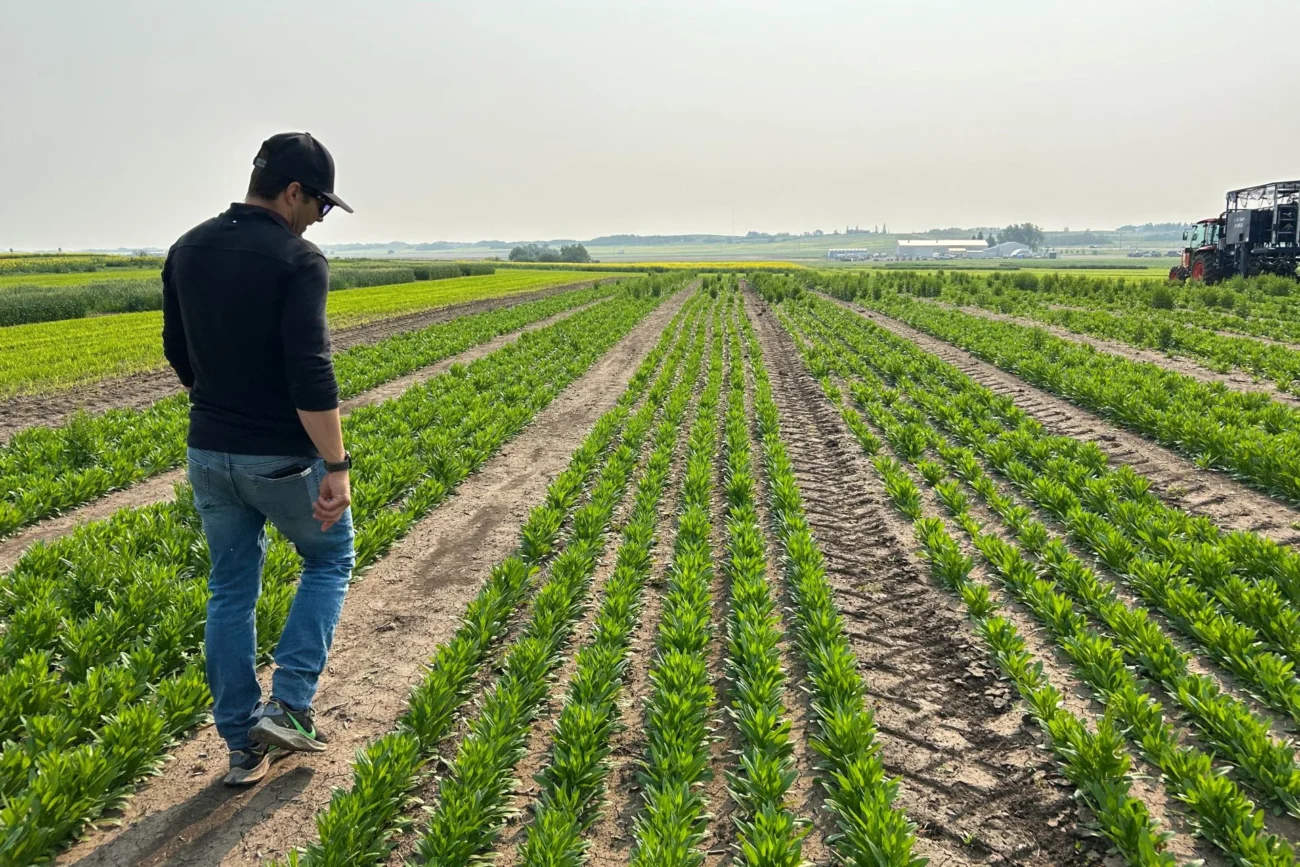
WAWANESA, Manitoba — After a season that swung from flooding to drought, farmer Simon Ellis braced for disaster. Instead, his combine filled with healthy wheat, oats, and soybeans—an outcome he credits not to luck, but to years of adaptation.
Ellis, a fourth-generation farmer in Wawanesa, has invested heavily in modern agricultural practices: no-till and minimum-till farming to preserve soil, underground tile drainage to prevent flooding, and precision fertilizer systems. Working with agronomists, he continually fine-tunes weed and nutrient management.
“We’re constantly making small adjustments,” Ellis said. “That’s how we keep up with a changing climate.”
Strong Yields in a Changing Climate
Across western Canada, farmers are producing larger harvests despite hotter, drier, and more erratic weather. Government data shows record 2025 harvests for spring wheat and canola, with yields far surpassing historical averages.
Spring wheat yields have risen to nearly 59 bushels per acre—about 77% higher than 30 years ago. Canola yields have nearly doubled over the same period.
These gains are helping stabilize global food supplies, even as climate models warn of long-term risks. A recent study published in Nature suggests North American wheat production could decline sharply by the end of the century without continued adaptation.
A Historically Harsh Farming Region
Farming in the Canadian prairies has always been difficult. The region receives roughly half the rainfall of U.S. Midwest states like Iowa and has a shorter growing season. Climate change has intensified these challenges, bringing more extreme weather events—heavy downpours, droughts, wildfires, and heatwaves.
According to Environment and Climate Change Canada, the country is warming at twice the global average, increasing pressure on agriculture.
Incremental Innovation Drives Success
Experts emphasize that rising yields are not the result of a single breakthrough but steady improvements across multiple areas:
- Advanced seed varieties with built-in resistance to pests and disease
- Precision agriculture using GPS-guided machinery and satellite data
- Efficient fertilizer placement during seeding
- Use of fungicides and herbicides to protect crop health
- Intercropping and soil conservation techniques
Automation has also played a major role, allowing farmers to apply inputs more efficiently and reduce waste.
One Farm’s Evolution
The Mowbray family has spent decades adapting their operation. Starting with small-scale drainage projects in the 1980s, they now manage extensive underground systems across hundreds of acres.
They also transitioned بالكامل to no-till farming by 2010, leaving crop residue in fields to retain moisture and prevent erosion. The result: yields that are double what they once achieved, even with less rainfall.
High Costs and Barriers
These advancements come at a steep price. Modern farm equipment—such as smart combines and data-driven tractors—can cost millions of dollars. While precision systems reduce inputs like fuel and chemicals, upfront costs remain a barrier.
Access to technology is uneven. Older farmers may resist adopting digital tools, while younger farmers often lack capital. Rural connectivity is another issue; unreliable broadband limits the effectiveness of data-driven farming systems.
The Role of Seed Science
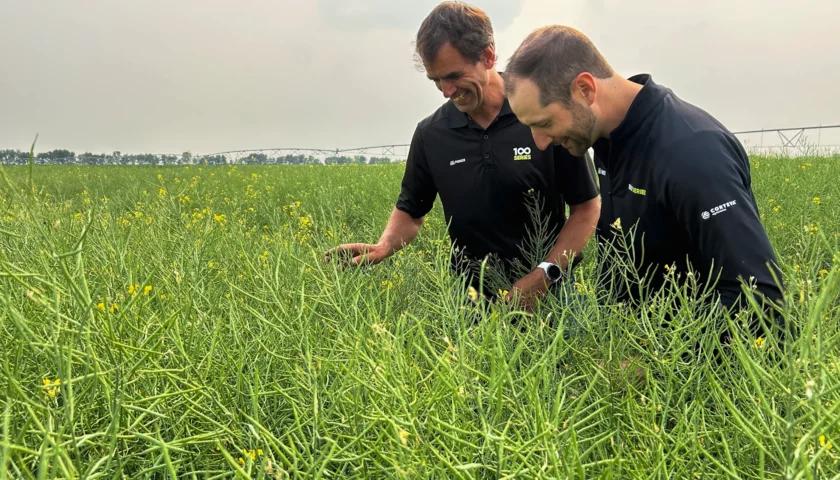
Behind the scenes, crop genetics are playing a critical role. Researchers are developing drought-tolerant and fast-growing varieties that can better withstand climate stress.
Organizations like Mustard 21 are working on alternative crops that establish quickly and perform well in dry conditions. Experimental crops like camelina are also being tested for both resilience and new markets, including sustainable aviation fuel.
Canadian Farmers Battle Climate Extremes With Innovation and Adaptation
An Uneven Future
Experts caution that adaptation won’t benefit everyone equally. Some farmers may not adopt new methods or may struggle despite doing so. Others, however, are likely to thrive.
The future of farming in Canada—and globally—will depend on continued investment in research, technology, and infrastructure. For now, farmers like Ellis are proving that even in the face of extreme weather, innovation can keep fields productive.
